
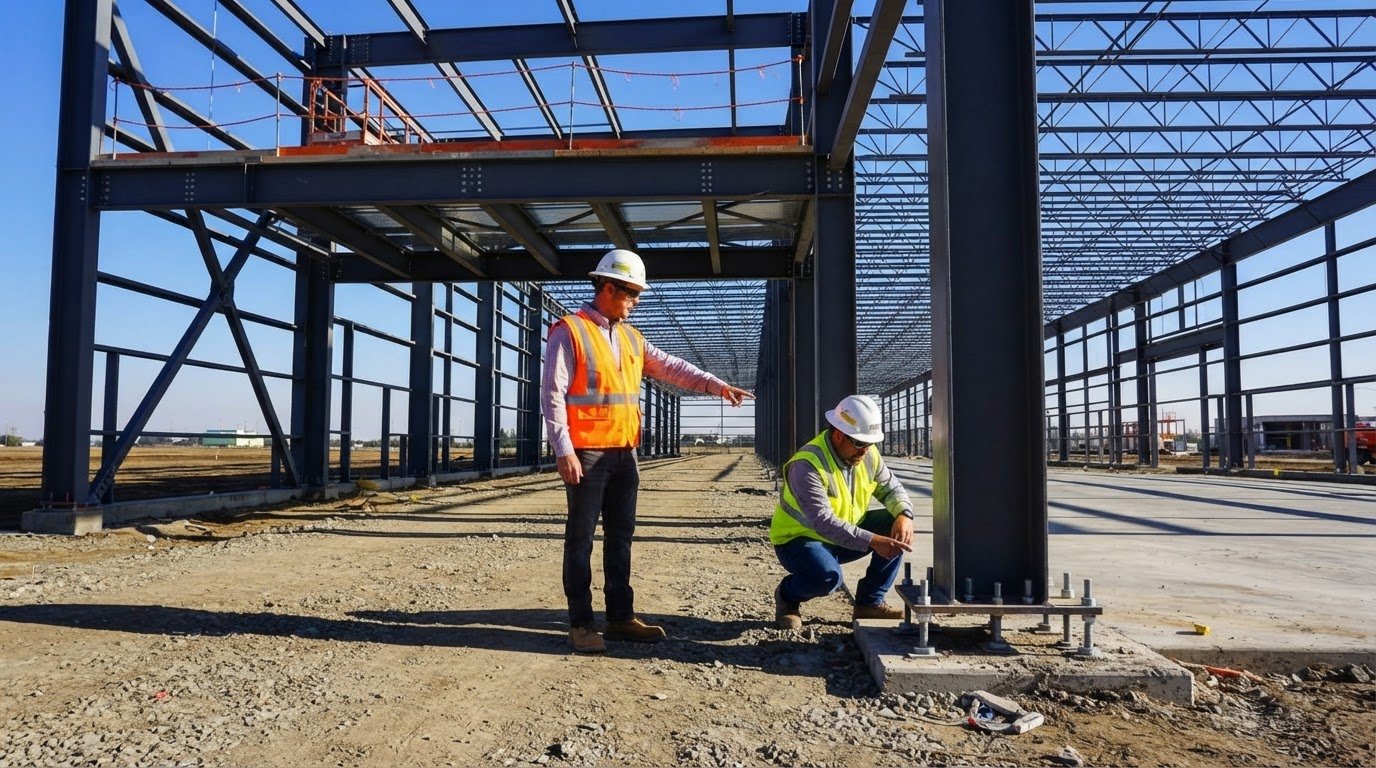
For most commercial, healthcare, and industrial projects in 2026, hire the project manager and lead superintendent 4 to 6 months before mobilization. That’s the practical answer to when to hire a commercial construction project manager: early enough for leadership to help organize the work before the site is ready for crews.
Hiring itself takes planning. A construction project manager search typically takes 8 to 12 weeks in the United States, so starting close to mobilization can leave little time for the new hire to understand the scope, coordinate the team, and prepare for the work ahead.
The right timing depends on project complexity and how much coordination the owner wants to manage in-house. This article explains how to plan staffing, account for hiring lead times, define the project manager’s role, and understand the responsibilities that affect schedules, budgets, and profitability, from early planning through active construction.
Key Takeaways
- Set the project scope, schedule, budget, and complexity before defining the project manager role, so the hire matches the work.
- Sequence leadership, core team, and field staffing around mobilization to reduce gaps in coordination and readiness.
- Clarify decision authority, reporting lines, and financial ownership so routine project decisions don’t bottleneck with the owner.
- Assess candidates through relevant project examples that show how they handle budgets, competing timelines, field issues, and communication.
- Effective project management connects trade coordination, materials, changes, documentation, and owner updates to support schedule and margin control.
1. Project manager impact on schedules, budgets, and profitability
A project manager connects hiring milestones to the work that must happen before mobilization. Bring the manager into planning while the team can still coordinate scope, procurement, trade sequencing, and the baseline schedule. For example, early involvement can flag a long-lead material that needs an earlier purchase decision. The manager can then track its delivery against the schedule instead of reacting when a crew is ready to install it.
Schedule control means turning the project plan into clear milestones, assigned owners, and regular progress updates. The project manager coordinates subcontractors, checks material readiness, records field issues, and follows up on changes. If an inspection or delivery shifts a planned activity, the manager updates affected trades and communicates the schedule impact. This gives the team current information to make decisions, rather than outdated dates or assumptions.
There is no single fixed U.S. cost for a commercial construction project manager. Compensation depends on the hiring arrangement, role scope, project duration, and local market, all of which shape the hiring budget. Define the role around the work it must control, including forecasting, cost tracking, change-order follow-up, and financial reporting. A manager who only reports costs has a different scope from one who coordinates project decisions and tracks budget changes.
Hire a commercial construction project manager during planning, early enough to influence coordination before mobilization. The manager can help establish schedule milestones, identify procurement needs, and organize handoffs before active construction begins. If the project is already underway, they can document current commitments, identify schedule conflicts, and develop a workable plan from available information. Earlier involvement leaves more room to consider construction implications before decisions are fixed.
There is no universal limit to the number of projects one project manager can oversee. It depends on project complexity, overlap, and the coordination each job requires. One large build with multiple trades may need more direct attention than several smaller projects at different stages. Map key milestones, site questions, owner updates, and decisions across assignments to assess workload. If urgent field issues routinely displace cost reviews or schedule updates, management capacity may be stretched too thin.
Profitability depends on how consistently the manager connects field progress with cost and schedule decisions. When an unforeseen condition arises, the manager documents it, informs the owner, tracks the decision, and coordinates next steps. This record supports clear change follow-up and helps the team understand schedule effects. During hiring, ask candidates for examples of safety, schedule, and budget performance on comparable work, including how they handled delays or changing field conditions.
2. What is the typical construction staffing timeline for a new project?
Yes. The best time to hire a project manager varies with project size, complexity, and delivery method. Projects with several phases or many trade interfaces benefit from leadership while design and procurement decisions are still developing. Decide when to hire a commercial construction project manager based on upcoming decisions, not just the date crews arrive. The delivery method also shapes responsibilities, reporting, and coordination needs.
Signs that a project needs dedicated management include crews waiting for answers, incomplete job information, missed materials, or delayed subcontractor coordination. Clients may lack updates while the owner visits jobs to catch issues or follows up on change orders. If these problems recur, identify where information or decisions are stalling. That pattern can show whether management capacity is insufficient or a specific handoff needs clearer ownership.
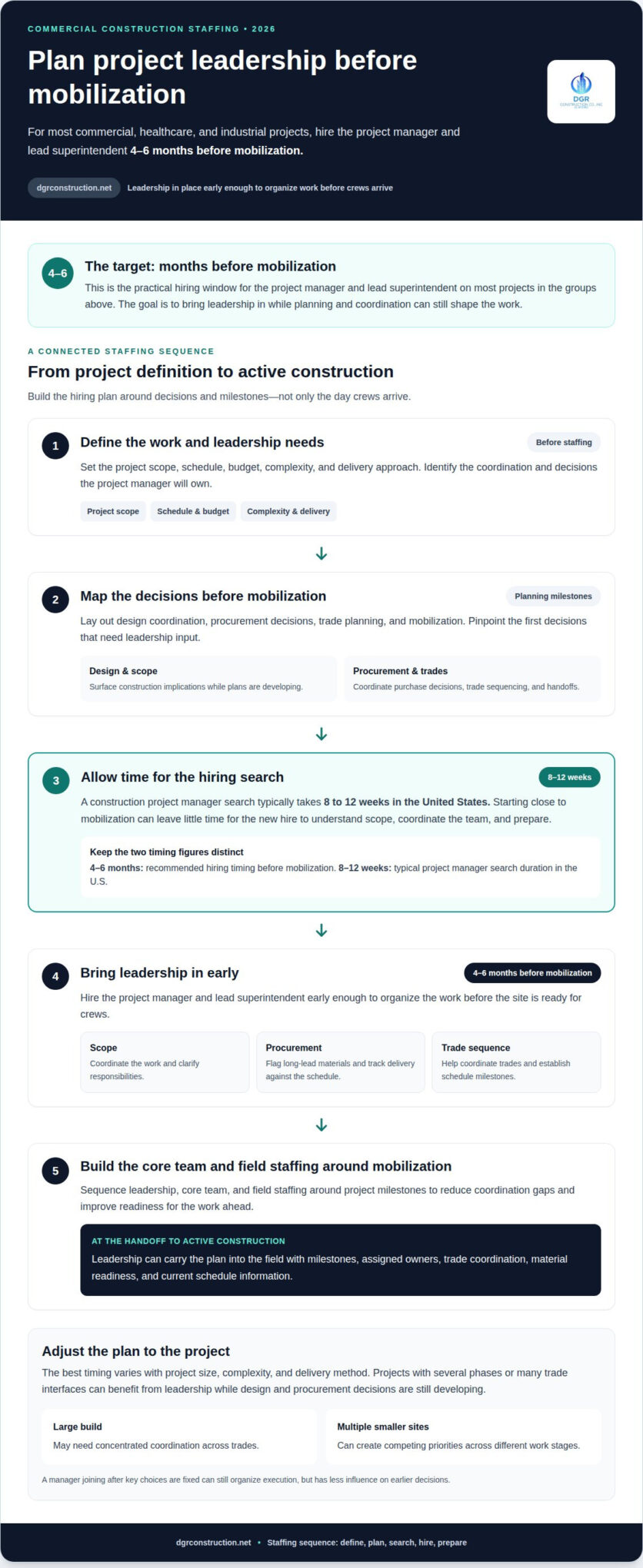
Build staffing around project milestones. Define the scope and delivery approach, then map design coordination, procurement decisions, trade planning, and mobilization. Owners deciding when to hire a commercial construction project manager should identify the first decisions that need leadership input. Involvement during design can surface construction implications while plans are developing. A manager who joins after key choices are fixed can still organize execution, but has less influence on earlier decisions.
Budget planning should connect project scope with the schedule and forecast. Establish a baseline, track committed costs, and update forecasts as bids arrive or the scope changes. For example, if a specified material has a long lead time, compare procurement timing and functional alternatives before a delay forces a rushed choice. Value engineering looks for efficient ways to build while protecting the project’s intended function and quality. It does not mean choosing the cheapest substitute.
Project complexity shapes the staffing plan. One large build may require concentrated coordination across trades, while multiple smaller sites create competing priorities and different work stages. Map decision points, active work fronts, procurement dependencies, and reporting needs. If the owner cannot keep those responsibilities moving without delaying other decisions, dedicated project management capacity may be appropriate.
For planning that connects project scope with construction coordination, integrated commercial construction planning can help align design, engineering, and building considerations. The immediate next step is to assign an owner to each milestone, forecast, and coordination handoff before that responsibility reaches the field. This makes the staffing plan responsive to the project’s actual needs rather than a generic calendar.
3. Project manager and superintendent hiring lead time
For most commercial, healthcare, and industrial projects in 2026, hire the project manager and lead superintendent 4 to 6 months before mobilization. This window gives leadership time to understand the project, coordinate decisions, and prepare the field team before crews arrive. Treat that date as a planning milestone, not the start of recruitment.
A construction project manager search typically takes 8 to 12 weeks in the United States. The sourcing and interview phase takes 4 to 6 weeks; a candidate’s notice period typically takes 3 to 4 weeks, followed by 1 to 2 weeks for negotiation and onboarding. These stages can overlap, but delays in interviews or approvals can push the start date past the project’s critical planning period.
Work backward from mobilization. Start the project manager and superintendent search 4 to 6 months ahead, then hire core project team members 2 to 3 months before mobilization. Confirm foremen and crew leaders 4 to 6 weeks before, ramp labor 3 to 4 weeks before, lock subcontractor manpower 2 to 3 weeks before, and finalize orientation and site logistics 1 week before. This structure connects hiring decisions to actual readiness.
A staffing example for an outpatient facility shows how these milestones can fit together: the project manager and superintendent search begins in February for September mobilization, leadership is hired in April, the core team is onboarded in July, and labor commitments are confirmed in August. Each group has a defined point to join the work, rather than relying on one late hire to establish every process at once.
Should you hire an in-house project manager or a consultant? An in-house hire may suit a continuing workload across multiple projects, while a consultant may fit a defined project need or a search for specialized knowledge. Compare the expected duration of the workload, the authority required, and whether management needs will continue beyond one project.
Prepare the operating structure before recruitment begins. Document project handoffs, reporting lines, schedule expectations, budget responsibilities, change-order follow-up, and the decisions the manager can make independently. Align operations, leadership, and HR on those priorities so interviews assess the same role. A clearly scoped position helps candidates understand accountability and allows the hiring team to evaluate fit against actual project demands.
Common mistakes include starting the search too close to mobilization, prolonging interview cycles, and treating a superintendent and project manager as interchangeable roles. Slow decisions can cost access to strong candidates, who may accept another offer. Before interviews, identify the project scope, schedule, team structure, and required experience. Use scenarios involving contractor disputes, material delays, and mid-build changes to assess judgment, communication, and the ability to keep decisions moving.
4. Defining role scope and must-have qualifications
Start by defining the work the project manager will own, not just the job title. Document project types, team structure, reporting relationship, and financial and operational authority. A manager overseeing one complex build needs different experience from someone coordinating several smaller sites. Clarify whether the role covers planning, active construction, or both, then align hiring criteria with those responsibilities.
Before recruitment, map the internal workflow from job handoff through closeout. Include scheduling expectations, client communication, change orders, material ordering, subcontractor coordination, quality checks, and closeout steps. For example, specify who reviews a proposed change, who communicates its schedule effect, and who records the decision. This makes gaps visible before pressure builds onsite and turns a broad job description into practical ownership.
Owners should agree on the manager’s decision authority before work begins. If every field question must go back to the owner, the role can add communication steps without relieving the bottleneck. Define which decisions the manager can make independently, which require owner approval, and what information each escalation needs. Clear thresholds for cost or scope changes help both parties act consistently and maintain accountability.
Qualifications should reflect the project’s size, complexity, delivery model, and market sector. Ask candidates to explain comparable work, including the scope they managed, teams they coordinated, decisions they owned, and results they influenced. A strong field employee may understand jobsite realities but lack budget forecasting experience; an administrator may have reporting skills but limited field judgment. Assess both dimensions against the actual role.
Test candidates’ knowledge with concrete examples rather than broad claims. Ask how they have managed competing timelines, changing conditions, and concurrent priorities. For a role involving several projects, ask how they organize milestones and resolve clashes between urgent site requests. Discuss project management systems they have used, such as Procore or Autodesk, and how those tools supported documentation and reporting.
Budget responsibility also calls for evidence. Ask candidates to walk through a real example involving forecasting, buyout, cost changes, and financial reporting. Then present a scenario involving a material delay or contractor dispute to assess communication, decision-making, adaptability, and team leadership under pressure. References can provide context about performance across multiple projects. Together, these steps help define a role that gives owners reliable visibility without routing every routine decision through them.
5. Construction project manager responsibilities
On an active commercial build, the project manager connects the schedule to daily field decisions. They coordinate trade sequencing, track milestones, and make sure subcontractors understand when their work can proceed. For example, if one trade must finish before another begins, the manager monitors the handoff and communicates any changes. This helps crews act on current priorities rather than conflicting instructions.
Procurement is another essential responsibility. The manager clarifies trade scopes, identifies specialty requirements, considers trade availability, and tracks long-lead items against the schedule. If a material delivery threatens a planned installation, they communicate the issue, assess affected activities, and coordinate a response with the project team. This helps the client understand the decision and its potential schedule implications before field plans change.
When unexpected site conditions arise, the manager documents what happened, informs the owner, and develops a way forward with the relevant team members. A clear record captures the condition, decisions, and follow-up actions. The manager also tracks change orders so their scope, schedule effects, and status remain visible. Prompt documentation gives the owner a clearer basis for decisions and keeps subcontractor communication aligned with the agreed direction.
Project controls need regular attention, not just a review at milestones. The manager updates schedule progress, monitors budget forecasts, records job information, and follows up on open issues. If a cost change or field constraint emerges, they connect it to affected work and communicate the impact through the project’s reporting process. They also coordinate with consultants and specialty contractors, helping resolve questions before those questions interrupt planned activities.
Building codes, project requirements, and contract terms also shape daily management. The project manager coordinates work so the team follows applicable requirements and understands how contract terms define responsibilities, risks, and decision paths. A contract concern requiring legal interpretation should go to a lawyer, not be treated as a project manager’s legal decision. This distinction keeps project administration clear and within the manager’s role.
Consistent client updates are part of the job. A useful progress update identifies completed milestones, upcoming activities, open decisions, and schedule or budget issues that need attention. The project manager also tracks quality concerns and closeout documentation, so unresolved items do not disappear as construction nears completion. Clear reporting helps the owner focus on decisions, exceptions, and business priorities instead of repeatedly chasing routine project information.
For a commercial project that needs coordinated oversight from planning through field execution, discuss your construction project and its management needs.
DGR Construction Co.
DGR Construction Co. coordinates architectural design, engineering, and on-site construction for commercial projects through an integrated design-build approach. Turn to the team when project scope, schedule, and construction responsibilities need alignment, or when you are deciding how management should fit your project. Coordination with architects, owners, and engineers connects planning decisions with field execution.
Whether your project involves a data center, industrial facility, aerospace project, or tenant improvement, the management approach should fit its requirements and delivery needs. Contact DGR Construction Co. to discuss your commercial project and its management needs.
Set Your Project Up for Its Next Decision
The next step is to connect the management role to the decisions your project needs now. Consider which choices can still change, where internal coordination is stretched, and who should be accountable for moving work forward. Deciding when to hire a commercial construction project manager means looking beyond the start date to when consistent oversight can shape execution.
DGR Construction Co. works on commercial projects including aerospace, data center, and industrial construction. If you are planning a new build or assessing how construction management fits your project, a focused conversation can help clarify the scope and appropriate next steps.
Contact DGR Construction Co. today to discuss your project and its construction management needs. A clear plan can help you move forward with greater alignment and confidence.
Frequently Asked Questions
What is the typical construction staffing timeline for a new project?
For most commercial, healthcare, and industrial projects in 2026, contractors hire the project manager and lead superintendent 4 to 6 months before mobilization. Core project team members are hired 2 to 3 months ahead, with foremen and crew leaders confirmed 4 to 6 weeks ahead. Labor ramp-up, subcontractor commitments, and site orientation follow closer to mobilization, aligning staffing with when each role is needed.
Why do construction projects get delayed because of hiring?
Projects can lose time when leadership roles remain vacant as planning decisions and team coordination get underway. A late hire may inherit fixed choices, incomplete handoffs, or unresolved trade questions instead of helping organize them early. Hiring delays can also affect candidate availability: drawn-out interview cycles risk losing strong applicants to faster-moving employers. Aligning hiring priorities early helps keep the search focused and avoid preventable gaps in project leadership.
At what stage of a commercial construction project should the PM start?
A project manager can add value during design, before key construction decisions are fixed. At that stage, the manager can help the team consider construction implications while plans are developing. If the project is already underway, a manager can review available documents, identify risks, and organize next steps. For projects in Los Angeles or Orange County, begin at the earliest stage when coordination needs exceed the owner’s internal capacity.
What qualifications and licenses should a commercial construction project manager have?
Prioritize experience that matches the project’s size, complexity, delivery method, and sector. Candidates should explain their knowledge of construction materials, codes, project software, budgeting, and schedule control with relevant work examples. License expectations depend on the position and assigned responsibilities; a project manager’s experience alone does not establish which credentials a project legally requires. Define the role first, then assess applicable qualifications against its actual duties and project requirements.
What are the risks of hiring a construction project manager too late?
A late hire has less opportunity to influence decisions already embedded in plans, procurement, and trade commitments. The manager may need to reconstruct project status from scattered records while responding to active field issues. That can narrow options for resolving coordination conflicts and make schedule impacts harder to assess. Even after work begins, structured documentation and clear owner communication can help organize remaining decisions and establish a workable path forward.
How do I evaluate and hire a commercial construction project manager?
Define the role’s project types, reporting line, decision authority, and budget responsibilities before interviews. Ask candidates for specific examples of managing similar work, including competing timelines, cost changes, and field decisions. Scenarios involving a subcontractor dispute or material delay reveal how they communicate and adapt under pressure. References can clarify how candidates have led teams across multiple projects. Keep interview priorities aligned among operations, leadership, and HR.